Write to posh@shaurya4equality.com or call +91 9935821008
What Makes An Internal Committee Truly Effective
5/8/20261 min read

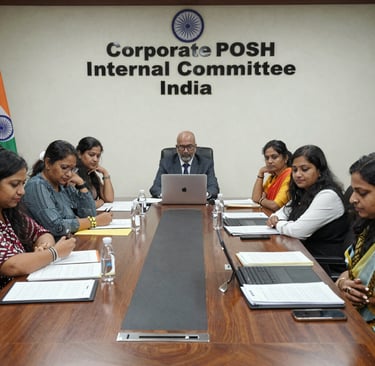
The constitution of an Internal Committee under the POSH Act is mandatory for eligible organizations. However, the existence of a committee does not automatically guarantee fairness, neutrality, or trust.
Effectiveness is determined not by formation — but by functioning.
1. Structural Compliance
An effective Internal Committee begins with proper constitution:
A senior woman employee as Presiding Officer
Minimum required members
External member with relevant experience
Formal appointment documentation
Structural errors weaken credibility from the outset.
2. Procedural Integrity
Procedural integrity includes:
Timely acknowledgement of complaints
Proper recording of statements
Neutral questioning
Evidence evaluation
Reasoned findings
Committees must resist informal shortcuts. Every step must be documented and justified.
3. Independence from Influence
One of the greatest threats to committee effectiveness is undue influence.
When senior leadership pressures outcomes — directly or indirectly — neutrality is compromised.
An effective committee understands its statutory independence and protects it.
4. Protection Against Retaliation
Fear of retaliation discourages reporting.
Internal Committees must:
Monitor workplace dynamics during inquiry
Advise management on interim measures
Ensure complainants are not disadvantaged
Protection mechanisms are essential for credibility.
5. Communication Clarity
Transparency within legal boundaries is critical.
Parties must understand:
Process stages
Timelines
Rights and responsibilities
Clarity reduces anxiety and speculation.
An Internal Committee that combines structural correctness, procedural discipline, independence, and communication clarity becomes a pillar of workplace dignity.